CO:CREATE / Driving AI Adoption
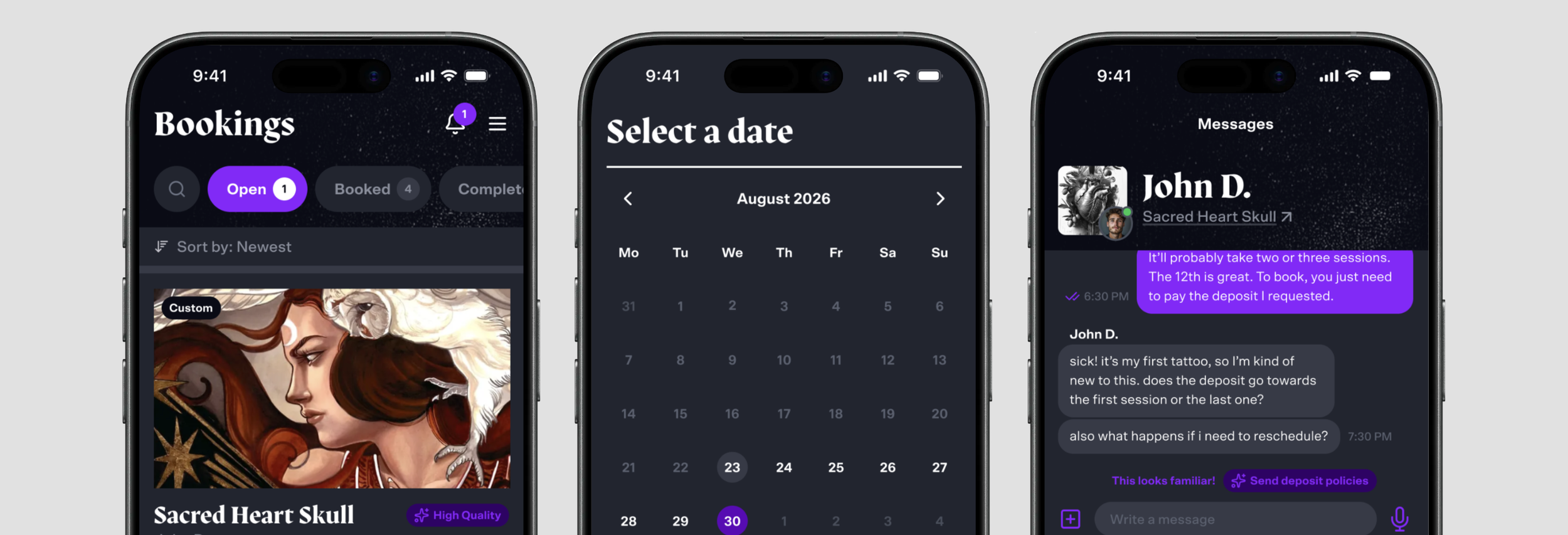
AI-assisted booking and scheduling system for a tattoo marketplace, built for a highly creative, trust-sensitive user base. Reduced manual sorting by 60-70% while rebuilding artist trust in a feature that initially triggered backlash.
2024 - 2025
Years
UX Design Lead
Role
Product Strategy, UI/UX, User Research, Workshop Facilitation, AI
Scope
PROBLEM
Leveraging AI tools to improve bloated management workflows risked outright rejection from core user base due to widespread lack of trust in a tattoo industry facing threats from genAI.
SOLUTION
Positioned AI as a tool to streamline bulky and high-frustration workflows, not a replacement for artistry or skilled human judgement, and implemented targeted solutions with clear labeling of AI usage.
Artists strongly value creative autonomy and authorship
Industry-wide fear and stigma around generative Al imagery triggered initial backlash from key stakeholders
Al was central to product strategy but poorly understood by users
High-frequency, repetitive operational tasks created friction and burnout
Needed to design for scale, trust, and adoption simultaneously
Context & Constraints
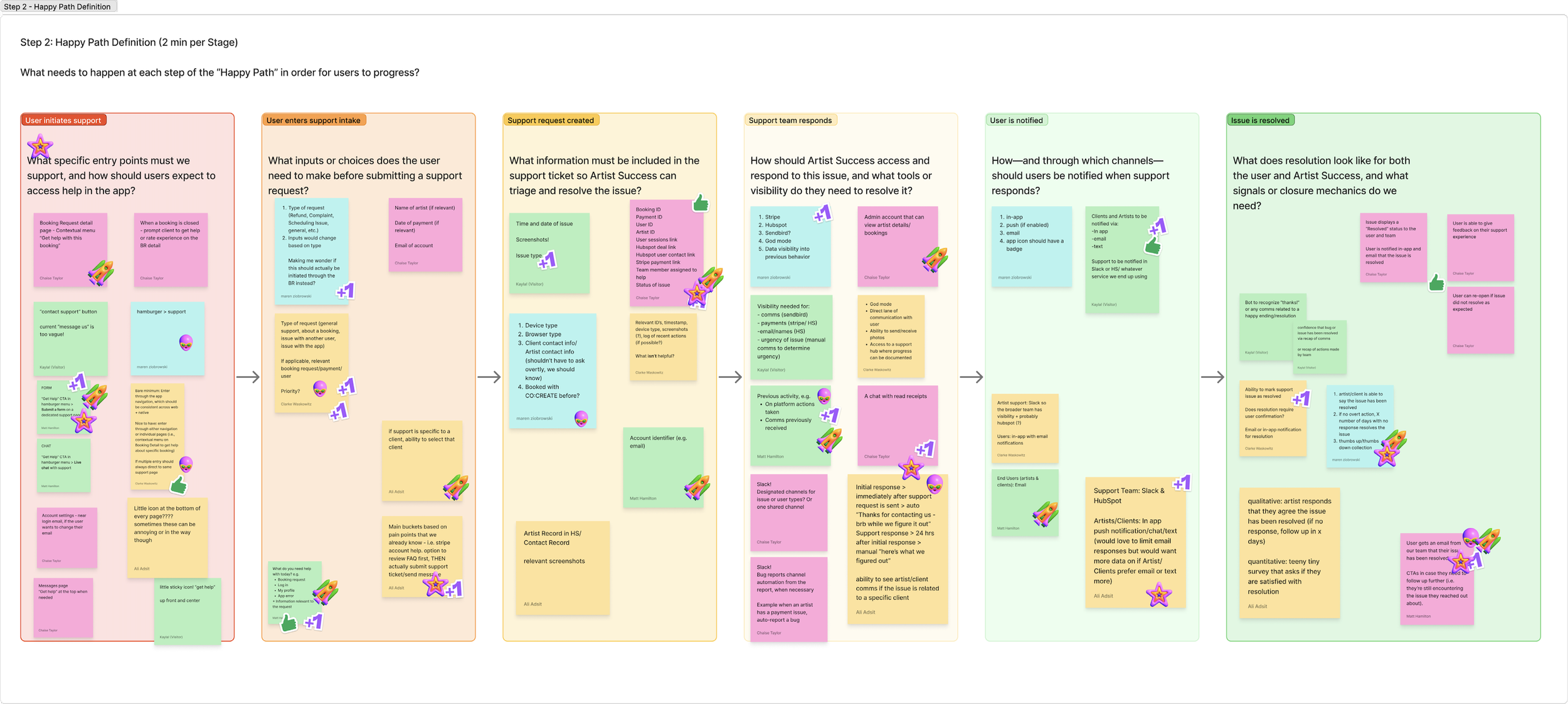
I facilitated a workshop with Product, Design, Eng, and Customer Success to identify core artist anxieties around Al and craft Al-enhanced happy paths
Led qualitative research with artists to uncover root fears vs surface reactions and quantitative analysis of current pain points
Identified that resistance centered on generative Al, not operational automation
Mapped booking, scheduling, and request-handling workflows to find high-friction, non-creative tasks
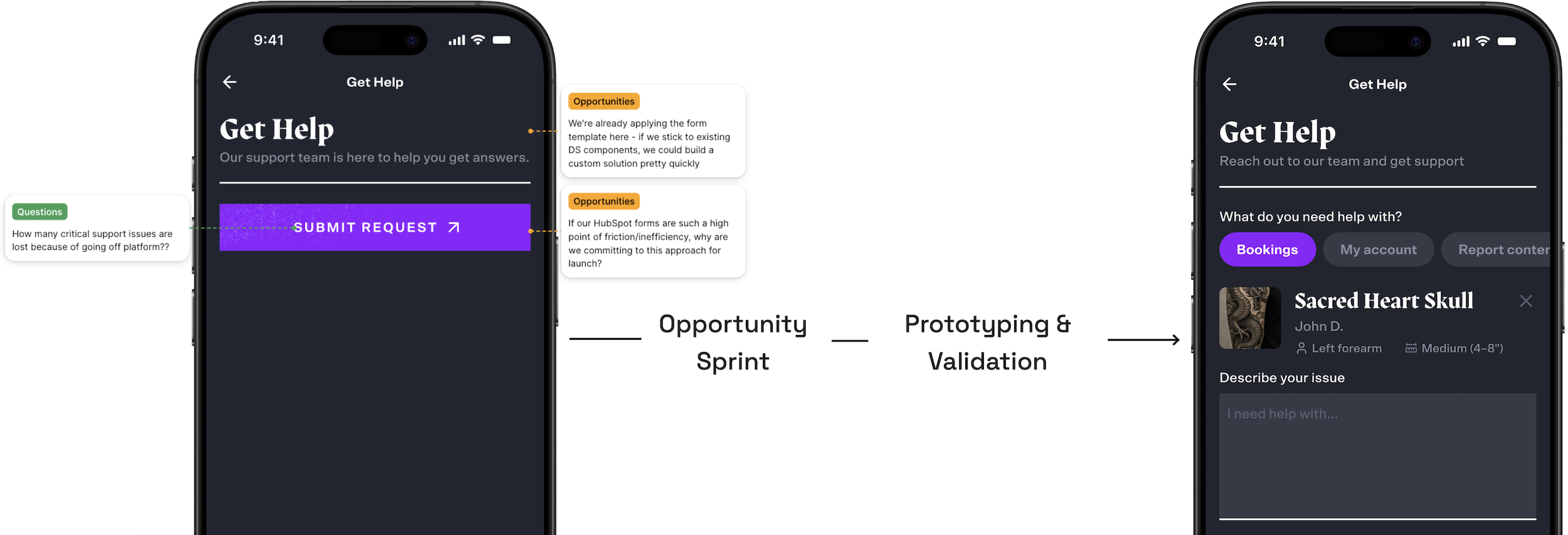
Used flows, low-and high-fidelity prototypes, and iterative testing with key stakeholders to validate assumptions
Worked closely with product and engineering to align UX decisions with long-term strategy
Design Strategy
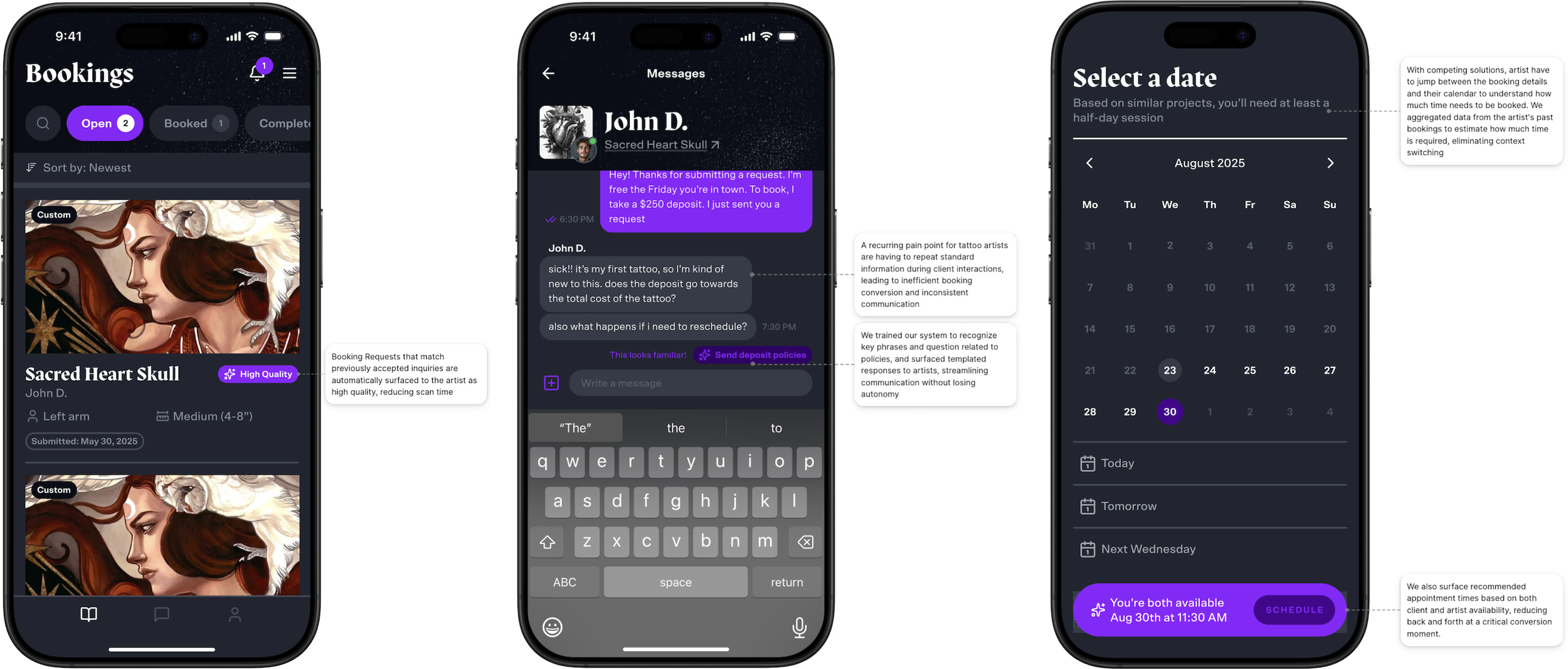
Designed Al-assisted booking request sorting and prioritization grounded in artists' past decisions
Introduced Al-supported scheduling and availability management to reduce back-and-forth
Framed Al as a behind-the-scenes operational tool, not a decision-maker
Designed clear interaction patterns that preserved human control at all key moments
Solution
Outcomes & Impact
Improved perception of Al in follow-up research sessions, including among previously skeptical users
Formalized internal strategies for Al usage across product and design teams for identifying legacy workflows prime for AI optimization
Established clear internal and external boundaries (including Al manifesto and social guidelines) that reinforced trust